Planning resource
Which Interior Wood Should You Choose for Your Home Sauna?
Choose from the wood combinations your sauna supplier approves for the exact design, then compare the complete interior rather than a species name alone. Ask what the walls, ceiling, benches and trim each use, see representative samples where available, and confirm the care instructions. Pay for an upgrade when you prefer the finished result and understand what changes; a darker finish or a premium label does not establish better performance.
By Wellness Room Guide editorial team
Updated
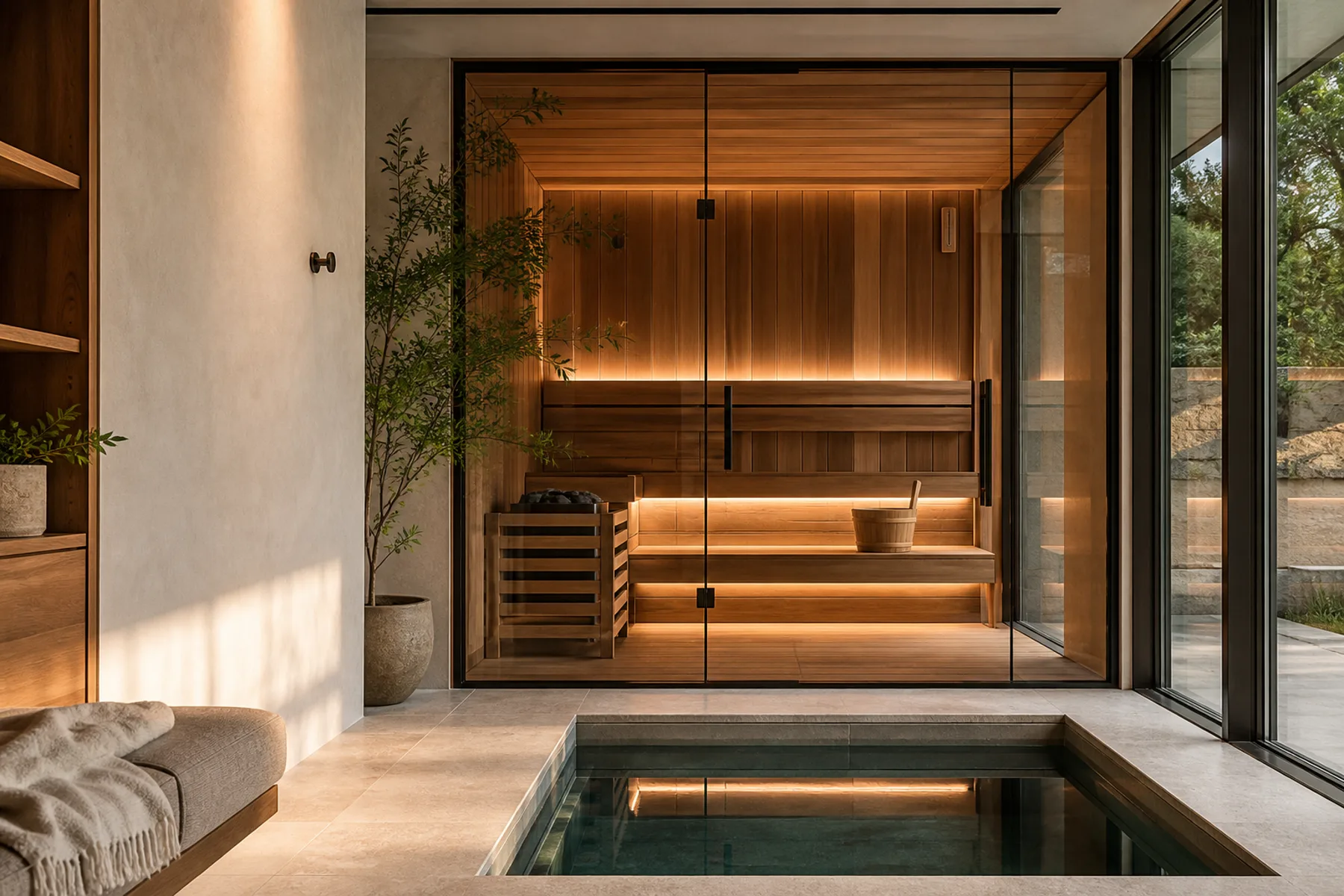
Explore the comparison and planning advice
You like the sauna. Now which wood will you want to sit with?
The layout is taking shape, and the supplier has sent a choice of pale, warm and darker interiors. They all look appealing in the photographs. You're trying to decide which feels like your room, and whether the more expensive option will still seem worth it once the novelty has worn off.
Start with the complete combination. Ask the supplier to identify the wood and finish on every visible part, then compare those choices under similar lighting. We'd spend more for a result you clearly prefer and can care for as instructed, rather than treating a species name as a shortcut to quality. Technical suitability belongs with the manufacturer and your project team.
Check what the package name actually includes
Walls and benches needn't use the same wood. Finnleo's custom range, for example, includes a spruce wall-and-ceiling option paired with Abachi benches, alongside cedar and hemlock combinations. Its named interiors also vary in bench boards, fronts and backrests. Those are product-specific options, not a universal list of suitable materials.
Ask for a short finish schedule: walls, ceiling, bench surfaces, bench fronts, backrests, skirts and trim. Have the supplier mark what changes in each quotation. Otherwise, you may be comparing one room's wall material with another room's complete interior package.
Look at the transitions. If you love a pale wall with a darker accent, ask to see how the corner trim, door surround and bench front meet it. A small detail can matter more to your enjoyment than upgrading every surface. Confirm that the combination you want is actually available for your design before treating a gallery photograph as an order specification.
Ask for a comparison you can trust
Ask whether the dealer can show representative pieces or an installed example. Sample availability, charges and return arrangements vary; don't assume a box will be sent free of charge. Identify which proposed component each piece represents and whether it shows the intended surface treatment.
View the choices together, and ask how representative the sample is of the supplied material. Discuss the amount of colour and grain variation you should expect. A single attractive offcut cannot promise that every board will look identical, so agree how the finished appearance will be specified before approval.
Photographs are useful for narrowing the shortlist, but compare them cautiously when the lighting differs. For example, a warm-lit image of a darker interior and a daylight image of a pale one don't isolate the wood choice. Ask for comparable views and, where practical, look at the materials alongside the finishes in the adjoining room.
Keep the bench decision in the conversation
The walls create the backdrop, while the bench and backrest are parts you will use directly. Ask to see the proposed bench detail as well as the wall board. Discuss the surface, board arrangement, front edge and backrest with the supplier, and distinguish material choices from changes to the seating layout.
If a showroom example is available, use the supplier's normal demonstration to judge the arrangement. A room-temperature sample cannot establish how a complete sauna will feel in use. Avoid treating an attractive finish, a smooth offcut or a species description as evidence of universal comfort or personal suitability.
Our seating-layout guide covers whether you can sit or recline as you intend. Keep that decision tied to the final drawing when comparing interior packages, so an attractive material change doesn't quietly substitute a different bench arrangement.
Understand the care before approving the appearance
Request the care instructions for the actual supplied surfaces, including anything required before first use. Ask who performs that initial work and whether it changes the appearance you are approving. Follow the sauna manufacturer's directions rather than choosing an ordinary household wood finish by colour.
Harvia's maintenance guidance, for example, describes a bench treatment that can accentuate the wood's colour and prohibits lacquer on sauna interiors. That is a reason to ask about your own manufacturer's approved treatment and its visual effect; it isn't permission to apply one brand's instructions to a different sauna.
Have the supplier separate everyday cleaning from occasional treatment, and identify the relevant products and responsibilities in the handover information. Don't buy on an unsupported promise that a more expensive wood will require no care or suit everyone's sensitivities.
Pay for the difference you actually want
Ask for the upgrade price against the same room layout and included equipment. List the changed surfaces and details, any sample or approval stage, and the effect on the delivery schedule. That gives you a decision you can explain: the extra cost buys these particular things you want to see and use.
If you remain equally happy with the standard combination after seeing a fair comparison, keep it on the shortlist. A coherent room you enjoy is a better purchase goal than the longest list of premium finishes. Our vetted wellness experts bring field experience and provider relationships to help you turn that preference into a clearer project conversation.